

Mining remains one of the world's most hazardous professions.
While working conditions have improved significantly compared to the past, miners continue to face daily dangers. Key risks include cave-ins, fires, explosions, dust exposure, and high noise levels. Modern mines are larger than ever, enabling the use of heavy machinery such as bulldozers, loaders, dump trucks, and cranes. However, operating in confined spaces still presents a high risk of accidents.
To address these hazards, the mining industry employs various safety measures. One example is vehicle proximity detection systems, which provide audio alerts like "door ajar," "object nearby," or "seatbelt not fastened." Cameras, monitors, sensors, and digital recorders can be mounted on the front, sides, and rear of mining vehicles, giving operators a full 360‑degree view. In critical situations, these systems can automatically brake or shut down the vehicle, enhancing operational safety.
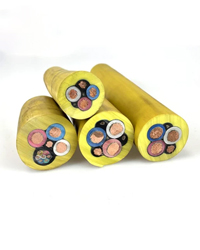
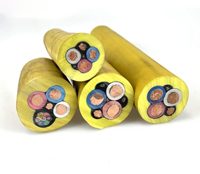
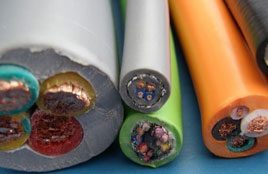
For such safety systems to function reliably, they depend on interconnected cables. These cables are typically mounted externally on vehicles and must endure the extreme mechanical and environmental conditions found in mines.
Material requirements for mining cables include:
Low Smoke Zero Halogen (LSZH)
To mitigate fire risks in mines, LSZH cables minimize the emission of smoke and toxic gases during a fire, helping to protect personnel in enclosed spaces.
Electromagnetic Shielding
Shielding reduces electromagnetic interference (EMI) and prevents signal loss. This protection is crucial not only for cable performance but also for the safe operation of equipment and the safety of workers. In confined underground settings, malfunctioning collision‑avoidance systems could otherwise lead to dangerous situations.
High Abrasion Resistance
Mining cables are exposed to rubble, dirt, and other abrasive materials. They must be designed to withstand such physical wear. The outer jacket of shielded cables is generally thicker, offering greater durability compared to unshielded versions.
UV Resistance
While mining vehicles are primarily used underground, they are often stored outdoors. UV‑resistant materials prevent degradation of cable properties when exposed to sunlight.