If you‘ve been sourcing fiber optic cables recently, you’ve likely noticed three things: more inquiries, longer lead times, and rising prices.
This is not a short-term fluctuation. It is a structural shift.
Global fiber optic demand has seen exceptional growth over the past two years — 138% year-on-year in 2024 and 77% in 2025. In 2026, total global demand is expected to exceed 100 million fiber-km.
The core driver is AI data centers.
Generative AI requires more than 10 times the fiber optic cable of traditional data centers. In 2024, AI-related fiber demand accounted for less than 5% of global demand. By 2027, it is projected to reach 35% — becoming the industry’s largest demand source. CRU forecasts that data center fiber demand will reach 91.6 million fiber-km in 2026, up 32% year-on-year.
Prices already reflect this supply-demand imbalance. G.652.D fiber rose from under RMB 20/fiber-km in early 2025 to RMB 83.4/fiber-km by March 2026 — an increase of over 400%. G.657.A2 specialty fiber saw even higher gains, up 650%. Some manufacturers‘ order books are already filled through Q1 2027.
The supply-demand gap is widening — the global fiber optic cable supply-demand deficit rate for 2026 is estimated at approximately 16.4%. On the supply side, optical fiber preform capacity cannot respond quickly — preform expansion cycles take 1.5 to 2 years, and effective capacity is already near full utilization.
These are not abstract numbers in industry reports. They mean your procurement costs are rising, lead times are extending, and suppliers may cut corners on quality to keep up with demand.
Demand is not a concept — it is concrete projects moving into procurement. The following projects are actively consuming global fiber optic cable capacity:
Each of these projects consumes substantial quantities of fiber optic cable — from submarine cables to terrestrial backbone networks, from data center interconnects to 5G backhaul.
Demand is surging, and supplier capacity is struggling to keep pace. This is when quality risks emerge — rush orders are driving up the probability of defects.
Fiber optic cables differ fundamentally from copper cables: copper defects are often visible (undersized conductors, insufficient thickness), but fiber quality issues are invisible to the naked eye. Attenuation may exceed specifications, flexibility may be poor, or inferior compounds may have been used — but nothing looks wrong when you receive the cable.
Below are the 5 most common quality issues in fiber optic cable procurement, and how buyers can verify them:
Attenuation is the core metric for signal transmission quality. Inferior fiber has narrow bandwidth and short transmission distance. Poor-quality fiber coating causes sudden loss increases. Improper fiber excess length control creates additional attenuation when the cable is under tension.
What buyers can do: Request factory test reports showing attenuation coefficients at both 1310nm and 1550nm wavelengths. Arrange sample re-testing upon arrival. Qualified single-mode fiber has specified attenuation limits at both wavelengths — verify each value against the standard.
Inferior fiber lacks flexibility and breaks when bent during coiling. Inconsistent fiber diameter prevents proper splicing with pigtails. This is often traced to preform quality — voids in the preform make drawn fiber unspliceable.
What buyers can do: Request bend performance test reports. G.657 series fiber has defined bend radius requirements. Upon arrival, take samples for small-radius bend testing. In one case, inadequate armor rod retraction created micro-bends, with OTDR testing showing attenuation spikes at specific locations — the entire link had to be re-laid.
Cable sheaths must withstand diverse climates and maintain stability for at least 25 years. Substandard cables use recycled plastics instead of quality polyethylene. The sheath may look fine at delivery but cracks and allows water ingress after months in service.
What buyers can do: Inspect sheath appearance — it should be smooth, uniform in thickness, glossy, and free of bubbles. Rough surfaces or visible contaminants indicate substandard material. Request third-party material test reports from the supplier.
The compound inside the cable provides water blocking and fiber cushioning. Poor-quality compound has poor thixotropy, causing micro-bending loss and failing link transmission performance. If acidic, it reacts with metallic cable components to release hydrogen — fiber attenuation rises rapidly when exposed to hydrogen, potentially taking down the entire link.
What buyers can do: Request compound test reports covering hydrogen evolution and thixotropy. Upon arrival, sample and test the compound.
Strength members (steel wires, aramid yarns, etc.) determine tensile strength. Substandard cables use iron wire or undersized steel wire instead of specified strength members — these rust easily, lack tensile strength, and may damage fibers during installation. Insufficient aramid yarn content in single-fiber cables is also common.
What buyers can do: Request material and specification documentation for strength members. Upon arrival, inspect for rust and verify diameters meet specifications.
Demand is rising, procurement volumes are increasing, but buyers should not sacrifice quality in the rush to secure supply.
1.Order early to secure capacity. Preform expansion takes 1.5-2 years, so supply cannot increase quickly in the short term. Order at least 2-3 months ahead to avoid project delays.
2.Put technical specifications in the contract. Fiber type (G.652D, G.657A2, etc.), attenuation limits, bend performance requirements — specify all of them in writing. Verbal assurances are not enough.
3.Require complete factory test reports. Attenuation coefficients, sheath material test results, compound hydrogen evolution data — every item must have traceable test documentation.
4.Arrange third-party inspection upon arrival. For large-volume procurements, engage an independent lab for sample re-testing. This is the most effective quality control measure available.
The global fiber optic cable market is undergoing a structural shift driven by AI — demand is up, prices are up, lead times are extending. At the same time, quality risks from production pressure are rising.
For procurement professionals, the core question is simple: can your chosen supplier reliably deliver fiber optic cables that meet quality specifications?
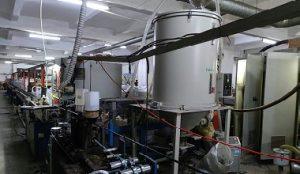
CN Cable Group offers full industry chain production capability — from optical fiber preform to fiber to finished cable. Products include layer-stranded and central tube fiber optic cables in multiple specifications, serving telecom carriers, data centers, 5G base stations, and other applications. For large international projects requiring fiber optic cable, CN Cable Group can supply products that meet international standards.
For project-specific requirements, contact us for product specifications and certification documentation.