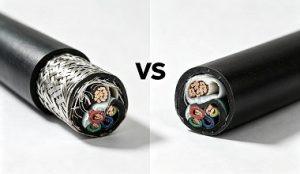
In high-voltage cable procurement, buyers focus on the cable itself. Accessories and installation are treated as “supporting details.“
The data tells a different story. The cable you‘re buying is probably fine. The accessories — and how they‘re installed — are where things go wrong.
A 2026 IEEE review paper found that cable accessories account for more than 60% of all cable system failures. Other IEEE sources put the figure closer to 70% for distribution networks.
CIGRE, the international council on large electric systems, reports that internal failures — originating from the conductor or oversheath — account for 71% of all cable faults. CIGRE data also shows that over half of HV cable outage time is due to failures in joints and terminations.
Most telling: 20% to 50% of all type tests on cable accessories fail. Type tests are conducted in laboratory conditions — everything controlled. If 20-50% fail there, what happens in the field?
The exact percentage varies across studies, but the pattern is consistent: accessories are the weakest link.
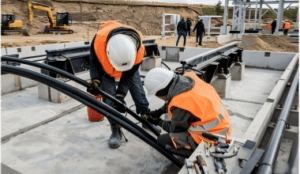
The cable is manufactured in a controlled environment. Accessories are assembled in cable trenches, by human hands.
In the cable body, the electric field is uniform. At joints and terminations, it concentrates sharply. Stress cones must smooth this transition. A few millimeters of error — and breakdown follows.
Studies show that when interface pressure drops from 0.5 MPa to 0.1 MPa, breakdown voltage drops from 46.84 kV to 22.34 kV.
Poor workmanship — voids, contamination, improper peeling, stress cone misalignment — is the leading cause. These defects don‘t cause immediate failure. They slowly degrade insulation over years.
Moisture is one of the primary causes of internal insulation damage. Once water enters, it forms water trees — which over years develop into electrical trees and cause breakdown.
Researchers investigated two 220kV prefabricated cable joint explosions. The failures involved electric field distortion, material degradation, and gas generation — multiple factors interacting. The joint was the failure point.
A 110kV cable joint failure was traced to moisture-induced corrosion of the grounding mesh, causing severe electric field distortion and progressive insulation degradation. The cable itself was intact.
A 66kV cable joint failed due to poor removal of the semi-conductive layer and very poor XLPE insulation preparation. The improper work left the insulation over-stressed. The cable was fine. The installation was not.
The pattern is consistent across all three: the cable is rarely the problem.
A supplier‘s “complies with standards“ statement is insufficient.
Ask: Do you provide on-site support? What qualifications do your installers hold?
Even if cable and accessory each pass type tests individually, the combination may still fail. For large projects, conduct trial assembly before installation.
Specify third-party witnessing of critical installation steps. Require on-site partial discharge testing for acceptance.
Do not rely solely on factory test reports. Request operating records of similar products under comparable conditions.
One more thing: Type test reports can be verified. Check the report number and issuing lab. If a supplier claims “passed type testing“ but cannot produce the full report — eliminate them.
The data is consistent across geographies and voltage levels: accessories are the most vulnerable component of any high-voltage cable system.
Not because they are poorly designed — but because they are installed in the field, by human hands, in conditions that never match a factory floor. With 20%–50% type test failure rates and over 60% of system failures occurring at accessories, they deserve the same scrutiny as the cable itself.
A high-voltage cable is not a standalone product — it is a system. And the reliability of that system is not bought. It is installed.
Tel: +86-371-60547601
WhatsApp : +8613598056591
Email: [email protected]