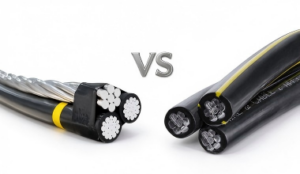
When purchasing low-voltage service entrance cables, the most common and costly mistake is treating URD (Underground Residential Distribution) and Service Drop cables as interchangeable. They are both rated 600V, but their internal structures are fundamentally different.
At a Glance:
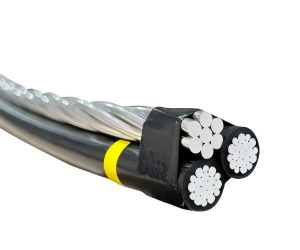
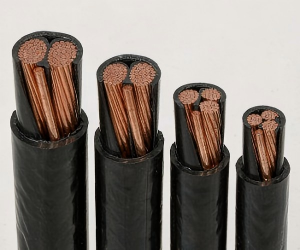
Here is the structural difference explained from a procurement perspective.
Why is it designed this way?
Because it is buried in the soil. Soil contains moisture, chemicals, and physical pressure. The overall jacket acts as a waterproof barrier to protect the concentric neutral and phase insulation from water ingress and corrosion. The concentric design also saves space, making it easier to pull through underground conduits.
Procurement Trap: If you use URD for overhead lines, the jacket—which is not designed for long-term UV exposure—will crack and degrade within months. Once the jacket fails, the wrapped neutral is exposed to the weather and begins to oxidize.
The Structure: Service Drop cables (such as Triplex or Quadruplex) consist of insulated phase conductors twisted together with a bare, uninsulated neutral conductor.
Why is it designed this way?
Because it hangs in the air. The bare neutral serves three critical functions:
1.Mechanical Support: It acts as the messenger wire, physically supporting the weight of the entire cable span between poles.
2.Heat Dissipation: Exposed to air, the bare neutral can dissipate heat efficiently.
3.Cost & Weight: Without an outer jacket or neutral insulation, the cable is lighter and cheaper to install overhead.
Procurement Trap: If you bury Service Drop cable directly in the ground, the bare neutral has no jacket to protect it. It will start to corrode in the soil within weeks or months, leading to open neutral faults and potential safety hazards. Furthermore, the twisted aerial structure easily snags and damages the insulation when pulled through underground pipes.
How do you verify what the supplier delivered? You don‘t need a laboratory; just cut a small section and look at the cross-section.
1.Check the Cross-Section:
2.Check the Surface Printing:
Q1: Can I use URD cable overhead?
No. URD‘s outer jacket lacks sufficient UV stabilization. Under direct sunlight, the jacket will crack, exposing the concentric neutral to corrosion.
Q2: Can I bury Service Drop cable directly?
No. The bare neutral on Service Drop cables will corrode rapidly in soil moisture. Direct burial strictly requires a jacketed cable like URD.
Q3: What is the difference between Triplex and Quadruplex?
Both are Service Drop (overhead) cables. Triplex is a 3-core structure used for single-phase 120/240V service. Quadruplex is a 4-core structure used for three-phase service.
Q4: How do I visually identify a URD cable?
Cut a cross-section. URD has an outer jacket that encases the phase and neutral conductors. Service Drop has exposed, twisted bare wires.
Tel: +86-371-6054 7601
WhatsApp: +8613598056591
Email: [email protected]