As a cable procurement manager, have you ever encountered the following scenarios?
A shipping container spends three months at sea, only for the copper wiring to be found oxidized and blackened upon opening at the job site—rendering the entire batch of cables scrap.
Wooden cable reels are detained by customs at the destination port simply due to the absence of IPPC fumigation markings, incurring hundreds of dollars in daily demurrage fees.
Workers at the site spend half a day just removing the packaging, and you even have to pay to dispose of the large iron reels as scrap metal.
Packaging is not a "factory detail." It is a direct driver of your total landed cost and project timeline.
This guide breaks down cable packaging into”four purchasing decision angles”— based on product weight, shipping route, customs compliance, and jobsite convenience. Use it as your supplier checklist before placing your next order.
The golden rule: Over-packaging wastes freight money; under-packaging risks total loss.
| Cable Type | Recommended Reel | Why |
| Light building wire (BV, single-core < 10mm²) | Plywood reel or Plastic reel | Lightweight, cheap, meets basic protection |
| Medium-voltage power cable (≤ 35kV, moderate weight) | Steel-wood reel (most common) | Best cost-strength balance; handles 1–5 tons |
| Heavy HV/EHV cable (> 66kV, single reel > 5 tons) | All-steel reel | Maximum strength; withstands stacking and rough crane loading |
| Long-length submarine/offshore cable | All-steel reel with reinforced inner barrel | Prevents core collapse under its own weight |
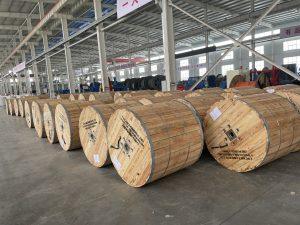
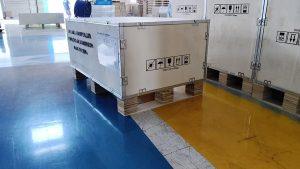
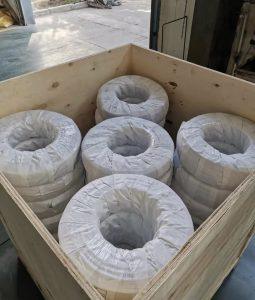
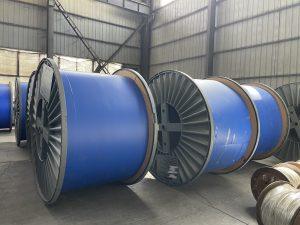
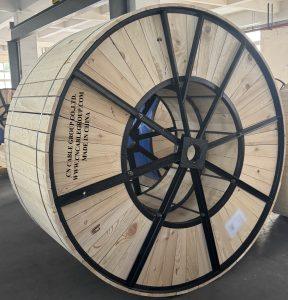
Purchaser benefit: Ask your supplier for the reel net weight and gross weight before shipping — this directly affects your volumetric/actual freight charges. A smart reel choice can save 5–10% on ocean freight.
Different transport modes demand different packaging strategies.

Enemy:Salt spray, humidity, temperature swings.
Must-have measures:
Full-body heat-shrink film (not just top covering)
Desiccant bags (silica gel) placed inside the reel barrel
Steel strapping bands (at least 4 bands) to prevent shifting
VCI (Volatile Corrosion Inhibitor) paper wrapped around conductor ends

Enemy: Vibration and sudden braking.
Must-have measures:
Wooden blocking chocks nailed to the reel base
Tie-down lashing points clearly marked
Radial cushioning between reel flanges and container walls

Enemy: Volumetric weight calculation.
Must-have measures:
Replace solid wood with lightweight plywood
Minimize flange diameter (consult engineering for minimum bending radius limit)
Use collapsible reel designs if repeat shipment
Purchaser benefit: A professional supplier will request your shipping mode and destination port before designing the packaging — not after. If they don't, that's a red flag.
This is the single biggest cause of customs detention for cable shipments.
What ISPM-15 requires:
All solid wood packaging (reels, pallets, blocking) must be heat-treated or fumigated and stamped with the IPPC logo (International Plant Protection Convention). Without it, your container may be:
Held at destination port (storage fees: $100–300/day)
Forced to return (return freight: 2x original cost)
Destroyed on-site (you lose the entire cargo)
Your supplier's obligation:
Provide clear photos of the IPPC stamp before shipment
Offer ISPM-15 exempt alternatives — such as plywood reels or engineered wood (no stamp needed, no fumigation)
Additionally, if shipping to the EU, check that packaging materials comply with REACH and Packaging Directive 94/62/EC (heavy metal limits — lead, mercury, cadmium, hexavalent chromium).
Purchaser benefit: Insist on a "Customs Clearance Packaging Checklist" attached to the packing list. This turns your supplier into a true logistics partner, not just a factory.
Your project team doesn't want to spend hours fighting with packaging. Neither does your site safety officer.
What smart packaging looks like at the jobsite:
| Feature | Why It Matters |
| Removable steel locking buckles (not welded) | Workers unpack with a wrench, not an angle grinder — safer and faster |
| Clear center-of-gravity marking on flanges | Prevents forklift/tilting accidents |
| Lifting sling colour-coding | Quick identification of safe lifting points |
| Reel recycling instructions | All-steel reels have scrap value — buyers can resell locally to recover costs. Wood reels are often garbage (extra disposal fee). |
Pro tip for buyers: Ask your supplier: "Can you provide a one-page visual unpacking guide (with photos) taped to the reel?" This small move reduces site call-backs and improves your team's efficiency.
Purchaser benefit: Better packaging design = lower labour cost on site + potential scrap rebate from steel reels.
| Decision Factor | Ask Yourself | Recommended Packaging Choice |
| Cable weight | Single reel > 5 tons? | Yes → All-steel. No → Steel-wood / Plywood |
| Shipping route | Sea voyage > 30 days? | Yes → Add VCI paper + double shrink film |
| Destination country | Requires ISPM-15? (almost all do) | Yes → Insist on IPPC stamp OR use plywood |
| On-site equipment | Does your team have a crane/forklift? | No → Request split-reel or smaller flange design |
Send us your cable specs, shipping port, and destination country. Our logistics engineers will reply within 24 hours with a detailed packaging proposal and a 3D reel drawing.
Tel :+86-371-6054 7601
Whatsapp / Wechat : +8613598056591
Email:[email protected]