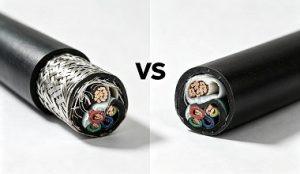
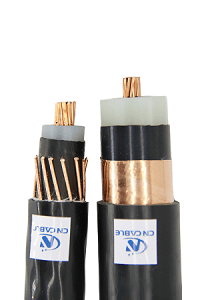
In industrial power distribution, substations, renewable energy plants, and urban grid upgrade projects, EPC contractors and procurement managers are increasingly asking the same question: can traditional cable solutions still meet the demands of modern medium-voltage transmission?
Not long ago, medium-voltage cable procurement was driven by two factors: unit price and basic parameters — voltage rating, conductor cross-section, installation method. But grid loads are rising, industrial equipment capacities are expanding, and renewable energy projects are scaling up. The procurement logic has shifted. Project teams are now prioritising long-term reliability over initial purchase price.
Below is a breakdown of why XLPE medium-voltage cables are becoming the baseline requirement for global projects.
A medium-voltage cable failure is not a "fix it and move on" event. It is a systemic problem.
When a medium-voltage cable suffers insulation breakdown during operation, the consequences are unplanned downtime, widespread outages, and crippling emergency repair costs.
The numbers tell the story:
| Cost Item | Amount |
| Single MV cable failure — total loss | Over $500,000 (generation loss, repair labour, replacement cable procurement) |
| Combined-cycle plant single failure | Generator step-up transformer cable fault can cause full plant outage for 72+ hours |
| Industrial plant production loss | $20,000 per hour in lost output |
| 700-metre cable replacement | Over $200,000 |
| Cable fault repair cost | Can reach 50% of cable replacement cost |
Partial discharge (PD) — an early warning sign of insulation degradation — affects 30% of medium-voltage cables over 20 years old, and 40% of power outages originate from these issues.
In these critical networks, the financial loss from a single insulation breakdown often dwarfs the cost of the cable itself. This is driving EPC contractors and energy project buyers to re-evaluate their procurement logic: are we buying a cable, or are we investing in 10 to 20 years of operational stability?
The fundamental difference between XLPE (cross-linked polyethylene) and PVC lies in molecular structure. XLPE forms a three-dimensional network through chemical cross-linking, fundamentally changing the material’s thermal performance.
| Parameter | XLPE | PVC | Difference |
| Continuous operating temperature | 90°C | 70°C | +20°C |
| Short-circuit withstand temperature | 250°C | ~160°C | +90°C |
| Service life | At least 40 years | 20-30 years | +10-20 years |
| Ampacity at same cross-section | Baseline | 15-20% lower | XLPE delivers 15-20% more power |
According to IEC 60502-1 Table 2, XLPE insulation has a maximum continuous conductor temperature of 90°C and a maximum short-circuit conductor temperature of 250°C (for up to 5 seconds). These are the standard's baseline requirements for thermosetting insulation materials.
What does a 20°C gap actually mean?
Under conditions of long-distance transmission, heavy industrial loads, and heat accumulation underground, this 20°C margin is the difference between a system that thrives and an insulation system that fails.
When cables are installed in space-constrained trays or conduits, or operated in high-temperature environments, PVC insulation approaching its temperature limit accelerates ageing. XLPE’s 90°C rating means the same copper conductor, same cross-section, can safely carry 15-20% more current.
Even more critical is short-circuit withstand capability. XLPE can withstand 250°C under short-circuit conditions (maximum 5 seconds). PVC’s short-circuit temperature limit is substantially lower. This means that under the impact of fault current, XLPE cables can withstand approximately 2.5 times the fault energy. This is not a theoretical difference — it is the difference between “the cable survives” and “the cable burns.”
Inexperienced buyers look at price per metre. Experienced project teams evaluate total cost of ownership (TCO).
For standard LV applications, PVC is 20-30% cheaper per metre than XLPE. The same gap exists in the medium-voltage cable segment.
In several industrial park projects, lower-spec MV cables were selected early on, resulting in accelerated insulation ageing within 3 to 5 years. The subsequent costs included:
These downstream costs far exceeded the initial savings.
| Cost Dimension | PVC Solution | XLPE Solution |
| Initial procurement cost | Lower (20-30% less than XLPE) | Higher |
| Maintenance frequency | High | Low |
| Service life | 20-30 years | At least 40 years |
| Total cost of ownership | Higher (due to replacement and downtime) | Significantly lower |
“Lowest procurement cost ≠ lowest project risk.” By choosing high-reliability XLPE cables from the start, long-term maintenance and downtime risks are virtually eliminated.
In high-load networks, XLPE’s long-term savings in copper/aluminium usage and energy efficiency can deliver a positive return on investment over the cable’s service life.
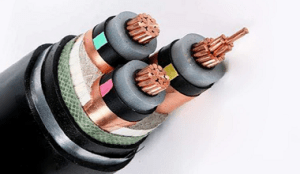
CN Cable Group manufactures XLPE-insulated medium voltage power cables to IEC 60502-2, covering 6/10kV to 18/30kV, with 90°C continuous operating temperature and 250°C short-circuit withstand. Full type test reports are available (PD, thermal cycle, lightning impulse, and short-circuit thermal stability tests). Products are suitable for industrial power distribution, substations, renewable energy plants, and urban grid upgrade projects.
For project-specific cable matching support, contact us.
Tel: +86-371-60547601
WhatsApp: +8613598056591
Email: [email protected]