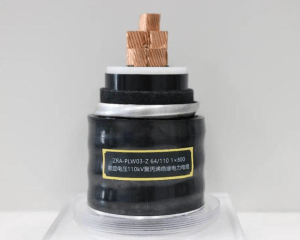
For the past 40 years, there was virtually only one option for the insulation material of medium- and high-voltage cables: XLPE. In 2026, that changed. In May, a 220 kV PP cable passed type testing; in June, a 10 kV PP cable officially entered grid operation. This new material is now moving into the engineering implementation stage.
The emergence of PP cable is not driven by technological breakthroughs alone, but by changes in procurement demands.
XLPE cable requires two time-consuming steps: cross-linking and degassing. PP cable does not require cross-linking and is directly extruded, shortening production cycles by approximately 70%. For time-sensitive projects, this is a difference that cannot be ignored.
More and more international projects require carbon footprint disclosure and the use of recyclable materials. XLPE cable cannot be recycled after decommissioning. PP cable reduces production energy consumption by 45%, cuts carbon emissions by approximately 5 tonnes of CO₂ equivalent per kilometre, and is 100% recyclable.
Space in underground utility tunnels, cable tunnels, and dense urban areas is limited. PP cable has higher current-carrying capacity — meaning smaller cross-sections can be used to deliver the same amount of power, saving valuable installation space.
PP cable is evolving from a "future technology" into a "viable option today." Procurement professionals need to update their selection framework.
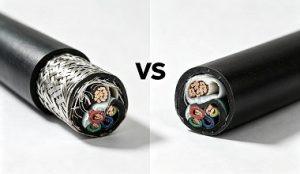
The differences between PP and XLPE boil down to three practical concerns that procurement professionals care about:
PP cable does not require cross-linking or degassing,shortening production cycles by approximately 70%.
PP cable reduces production energy consumption by 45%, cuts carbon emissions by approximately 5 tonnes of CO₂ equivalent per kilometre, and is 100% recyclable. It has been reported that compared with traditional XLPE cables, the entire production process of PP-insulated cables reduces carbon emissions by 40%.
At the same cross-section, PP cable offers 10%–20% higher current-carrying capacity than XLPE cable. The conductor's long-term allowable operating temperature reaches 90–105°C, with a short-circuit maximum of 250°C. When the operating temperature of a 35 kV PP cable is raised from 90°C to 105°C, current-carrying capacity can increase by more than 10%.
But there are also limitations to consider:
Some studies indicate that under long-term high-voltage conditions, PP cable's electrical performance may not match that of XLPE cable. Under thermal shock conditions, the breakdown strength reduction of modified PP (approximately 9.33%) is greater than that of XLPE (approximately 5.26%). PP cable currently lacks the decades of operational data that XLPE has accumulated.
Procurement professionals need to weigh "performance advantages" against "maturity risks" when making their decisions.
Projects where PP should be prioritised:
Projects with ESG compliance requirements. PP cable has lower production energy consumption, lower carbon emissions, and can be recycled after decommissioning, giving it a clear advantage in carbon footprint disclosure and green certification.
Projects with limited installation space. Utility tunnels, cable tunnels, dense urban areas — PP cable's higher current-carrying capacity means smaller cross-sections can deliver the same power.
Time-sensitive projects. PP cable shortens production cycles by approximately 70%, making it a faster option for projects with tight deadlines.
Projects focused on life-cycle cost. PP cable is 100% recyclable after decommissioning, reducing disposal costs.
Scenarios where XLPE remains the better choice:
For projects with stringent requirements for technological maturity (such as nuclear power, defence, and other special fields), or where the voltage level falls outside the range that PP cable has been sufficiently validated for, XLPE remains the more reliable option.
PP is not here to replace XLPE.
XLPE, validated over decades, remains the mainstream and reliable choice in the high-voltage cable sector. PP is currently a complementary option, not a replacement.
But the "default option" for cable procurement is moving from one to two. Procurement professionals don't need to immediately "swap out" XLPE, but they do need to establish a new selection framework: when selecting cables in the future, beyond voltage rating, cross-section, and armour type, you should also consider: XLPE or PP?
Initial procurement costs may be slightly higher, but economies of scale have not yet fully materialised. With a production cycle shortened by approximately 70% and 100% recyclability, the life-cycle cost may prove more advantageous.
It reduces production energy consumption by approximately 45%, cuts carbon emissions by about 5 tonnes of CO₂ equivalent per kilometre, reduces overall production process carbon emissions by 40%, and is 100% recyclable. For projects with ESG compliance requirements, PP offers clear advantages in carbon footprint disclosure.
At the same cross-section, PP cable offers 10%–20% higher current-carrying capacity than XLPE cable. When the operating temperature of a 35 kV PP cable is raised from 90°C to 105°C, current-carrying capacity can increase by more than 10%.
Some studies indicate that under thermal shock conditions, the breakdown strength reduction of modified PP (approximately 9.33%) is greater than that of XLPE (approximately 5.26%). XLPE has decades of operational data, while PP lacks the same volume of long-term validation. Procurement professionals need to weigh "performance advantages" against "maturity risks."
No. When switching from XLPE to PP cable, there are significant differences in the design, installation, and performance of cable accessories. PP cable requires a dedicated accessory system. Procurement professionals must confirm whether the supplier can provide compatible accessories that have passed type tests.