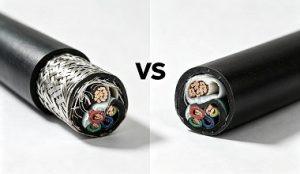
You‘re reviewing a cable specification for an industrial project. The drawing calls for “Class 2 stranded conductor.“ You‘re not sure if that‘s a firm requirement or if a Class 1 solid conductor would work just as well.
This is a common question in LV cable procurement.
Here‘s what you need to know to make the right choice.
IEC 60228 classifies cable conductors by their construction:
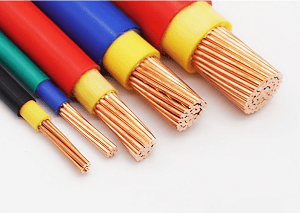
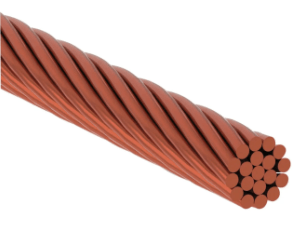
A quick way to understand the relationship: Both Class 1 and Class 2 are intended for fixed installations, but Class 2 is noticeably more flexible. If your project requires frequent bending or movement, you‘ll need to consider Class 5 or Class 6 conductors.
Why this matters: Understanding conductor classification helps you read and interpret technical specifications correctly — and know when a spec can be adjusted.
The biggest difference between solid and stranded conductors is flexibility.
Why this matters for procurement:
If your cable needs to run through tight spaces, along curved paths, or through conduit bends, a stranded conductor is easier to install. If the installation is straight and the cable won‘t move after installation, a solid conductor works just fine — and costs less.
Installation convenience:
Stranded conductors are easier to pull through conduit, bend around corners, and route in tight spaces. Electricians generally prefer them for complex installations because they require less force and are more forgiving.
Termination reliability:
Solid conductors terminate more simply and reliably. When tightened under a screw terminal, the solid wire stays put. Contact resistance remains stable over time.
Stranded conductors require more care during termination. The fine wires can splay, break, or loosen over time if not terminated correctly. They typically require ferrules or specialised connectors to ensure reliable connections — adding a small step to the installation process.
The trade-off:
Stranded conductors are easier to install but require more attention during termination. Solid conductors are harder to install but more reliable once terminated.
At the same nominal cross-section, solid and stranded conductors have the same DC resistance limits. The standards (IEC 60228) specify the same maximum resistance values regardless of construction.
In most LV fixed installations — especially at power frequencies (50/60Hz) — the electrical performance difference between solid and stranded conductors is negligible. It is rarely the deciding factor in conductor selection.
Why this matters: Don‘t get distracted by electrical performance comparisons. In most practical applications, the choice comes down to installation requirements, not electrical properties.
Step 1: Will the cable move after installation?
Step 2: Is the installation path complex?
Step 3: What type of termination?
Quick Reference:
| Decision Factor | Choose Class 1 (Solid) | Choose Class 2 (Stranded) |
| Installation path | Straight runs, fixed installation | Conduit bends, tight spaces, complex routing |
| Post-installation movement | None expected | Vibration or slight movement expected |
| Termination | Screw terminals, simple compression | Ferrules, vibration-resistant connectors |
| Cost priority | Cost-sensitive projects | Installation efficiency prioritised |
| Typical applications | Building backbone cabling, residential electrical | Control cabinet wiring, industrial equipment connections |
CN Cable Group manufactures LV cables with all three conductor classes per IEC 60228:
Class 1 (solid) : Fixed installation, straight-line cabling, building backbone cabling
Class 2 (stranded) : Industrial power distribution, installations requiring some flexibility
Class 5 (flexible) : Control cabinet wiring, cable carriers, frequent flexing applications
https://www.cncablegroup.cn/products/
For conductor selection support or project-specific requirements:
Tel: +8613598056591
WhatsApp: +8613598056591
Email: [email protected]